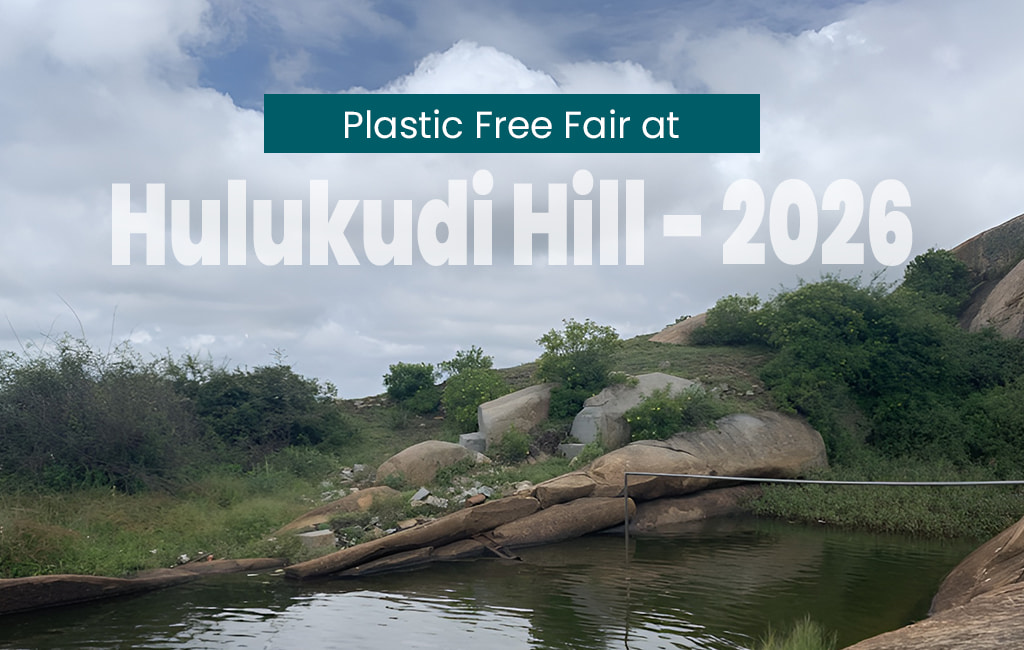
Plastic Free Fair at Hulukudi Hill- 2026
Overview
The Plastic Free Fair at Hulukudi hill- 2026 aims to address the growing concern of excessive plastic waste and water wastage during large religious and public gatherings, especially at hilltop locations. Thousands of single-use plastic water bottles are generated in a single day, leading to improper disposal, water wastage, and plastic pollution that threatens the mountain ecosystem, wildlife, and human health.
Hulukudi hills – though known for religious importance, it’s a monolith hill with rich bio-diversity of flora and fauna. It’s a hub for rare species of plants and animals and holds significant environmental importance. This hilltop can be protected from excessive plastic poisoning.
Objective
1. To reduce excessive generation of single-use plastic water bottles.
2. To minimize wastage of drinking water during the fair.
3. To ensure proper collection and disposal of plastic and hazardous waste.
4. To prevent plastic waste from reaching the top of the mountain and surrounding natural areas.
5. To promote sustainable and reusable alternatives among devotees and organizers.
Impact of 2025 Initiative
• 50% Reduction in Plastic Water Bottle Waste – A significant decline compared to previous years.
• Eco-Friendly Alternatives Adopted – Use of cloth bags, steel glasses, and designated waste bins.
• Cleaner Environment – 100+ waste disposal points prevented plastic waste from entering water bodies and farmlands.
• Greater Community Awareness – Over 30,000 devotees experienced and witnessed a plastic-free initiative.
• Increased Volunteer Engagement – More than 30 volunteers from Exalogic actively supported waste segregation and awareness.
• Steel Glasses for Water Distribution – 1,000 steel glasses (provided by Adamya Chethana) replaced 6,000+ plastic water bottles, ensuring hygiene and reducing waste at main food distribution center.
Planned Actions for 2026
1. Install decentralized water cans at main food distribution centers to reduce single-use plastic.
2. Supply 200 glass water bottles at bottom of Hill with a deposit-based return model.
3. Provide depository cloth bags at bottom of Hill to completely avoid plastic carry bags.
4. Introduce cash repayment (?1–?2 per bottle) for returned plastic bottles.
5. Install plastic hazard awareness boards and banners highlighting environmental and animal health impacts.
Recent News

Sacred Flow Cleanup…
31-May-2025

Hulukudi Hills Fair:…
05-Feb-2025

Menstrual Hygiene Management…
17-Jan-2025
Categories
4
6
1